
products
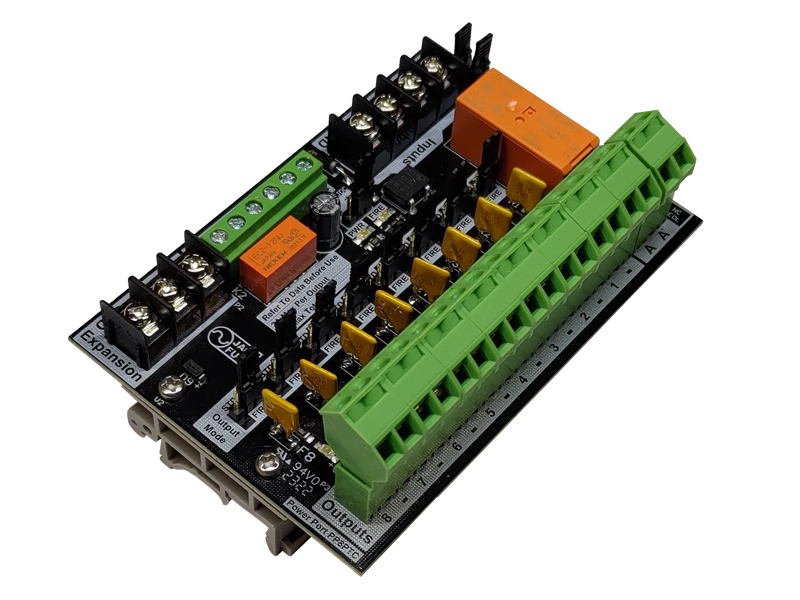
The Power Port 8PTC is our premium power distribution module and is used when system uptime and security is a priority.
APPLICATIONS
- Fused power distribution for all security devices
- Fused over current protection
- Automated emergency fire trip door override
- Fire trip alarm monitoring
- Fire trip interface to automatic doors and other devices
FEATURES
- Eight self-healing fused outputs with status LED
- Selectable outputs – fire power or standard power
- 12VDC
- Two dry contact interface outputs
- Fire alarm monitoring output
- Dry contact, 12 or 24VDC fire trip input (non-polarised)
- Unfused auxiliary output for expansion
- DIN rail mount
Simply put, because it is required under various building legislation and saves lives. There is a legal and moral obligation.
In many countries, including Australia, any electronically locked door in the emergency exit path must automatically unlock in the event of a fire alarm anywhere in the building. (Check your local building code and legislation)
Automatic fire trip release is a key function of the Jack Fuse power Port PP8 modules.
In addition many clients will insist that all their electronically locked doors must release on a fire alarm, whether this required under law or not. It is just better to be safe rather than sorry.
Often a new building will not be occupied until the local fire authority has inspected and signed off on fire regulations including fire trip release.
Frequently Asked Questions (FAQ)
Q: Can I use a normally open (NO) fire trip interface connection?
A: No, in Australia this is not an acceptable fire trip method.
According to AS 1670, a fire trip interface to an electronic access control system must be fail-safe and supervised.
A fail-safe, supervised circuit is most commonly achieved using a normally closed contact provided by the FIP (now called the FDCIE – Fire Detection Control Indicating Equipment). The access control system will send power via this connection that in turn, powers a fire trip relay that controls power to door locks. If any part of this connection fails, or if the alarm is activated, the relay will turn off, and the doors will unlock. A fault or cable disconnect will cause a fail-safe situation.
The Jack Fuse PP8FR, PP8PTC, PP5FR and PP2HC provide a built-in, fail-safe interface that will not accept a NO fire trip interface.
A normally open contact will not provide a supervised fail-safe connection, as power will only flow during an alarm. A fault or cable disconnect will not be noticed until the system is tested or when doors don’t unlock during a real fire alarm.